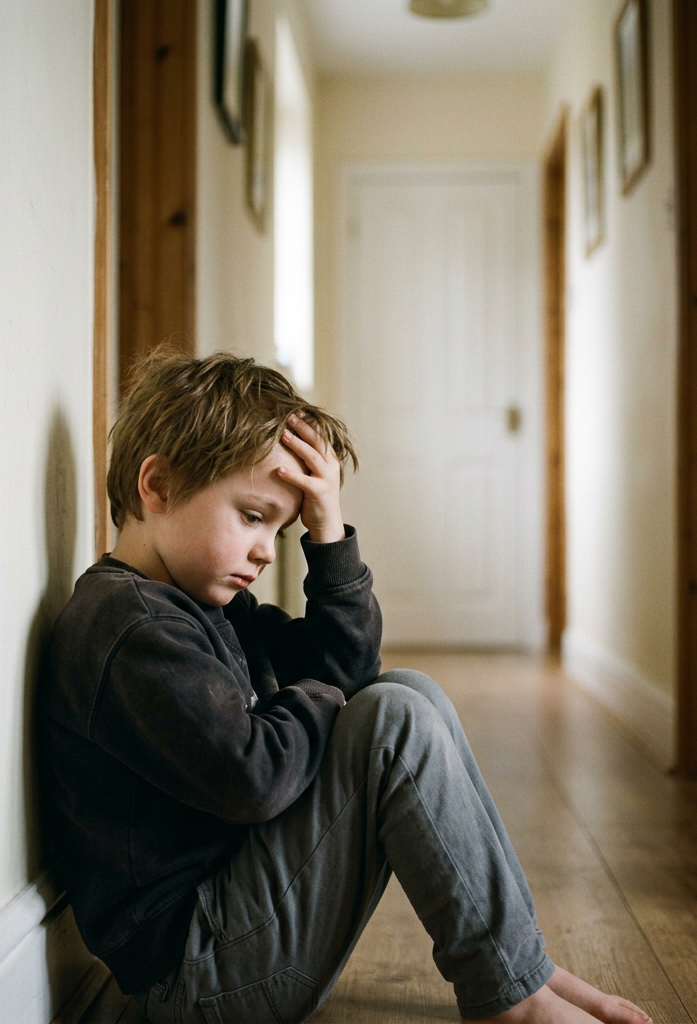
When adults experience grief, they often have the language and life experience to understand what they are feeling. Children do not. They are still learning how to process emotions, communicate difficult thoughts, and understand the world around them. Because of this, grief in children can sometimes appear very different than people expect.
Many people imagine grief as sadness alone, but children often express grief in ways which are quieter, more confusing, or less immediately recognizable. A grieving child may become withdrawn and distant. Another may become angry, anxious, unusually quiet, or emotionally reactive. Some children struggle to concentrate in school or suddenly lose interest in activities they once loved. Others may appear completely unaffected for a period of time, only for grief to surface later in unexpected ways.
Children also tend to process grief in stages as they grow. A child who experiences a major loss at a young age may revisit that grief many times throughout their life. As they mature emotionally and mentally, they begin to understand the loss differently. Questions and emotions which were impossible to process at age seven may return at age twelve, sixteen, or even adulthood with entirely new meaning.
This is one reason why grief in children can sometimes go unrecognized. Their emotions may not always look the way adults expect them to look.
Some children express grief outwardly. Others carry it internally. Some become protective of others around them. Some become fearful of further loss. Some become highly independent at an early age. Others may struggle with emotional regulation because they do not yet know how to explain what they are feeling inside.
None of these responses make a child “broken.” They are human responses to loss.
One of the most important things adults can offer grieving children is emotional safety. Children need spaces where they can express feelings without fear of judgment, pressure, or the expectation that they should “move on” quickly. They need compassionate adults willing to listen patiently and understand that grief is not something which follows a simple timeline.
Creative expression can also play an important role in helping children process difficult emotions. Art, music, storytelling, movement, and imaginative play often allow children to communicate feelings they may not yet have words for. Creativity creates opportunities for emotional release, reflection, and connection in ways which can feel safer and more natural than conversation alone.
We believe that every child deserves compassionate support through life’s most difficult experiences. We believe grief should be met with patience, understanding, creativity, and community. And we believe healing often begins by simply allowing children to feel seen, heard, and safe enough to express what is happening inside them.